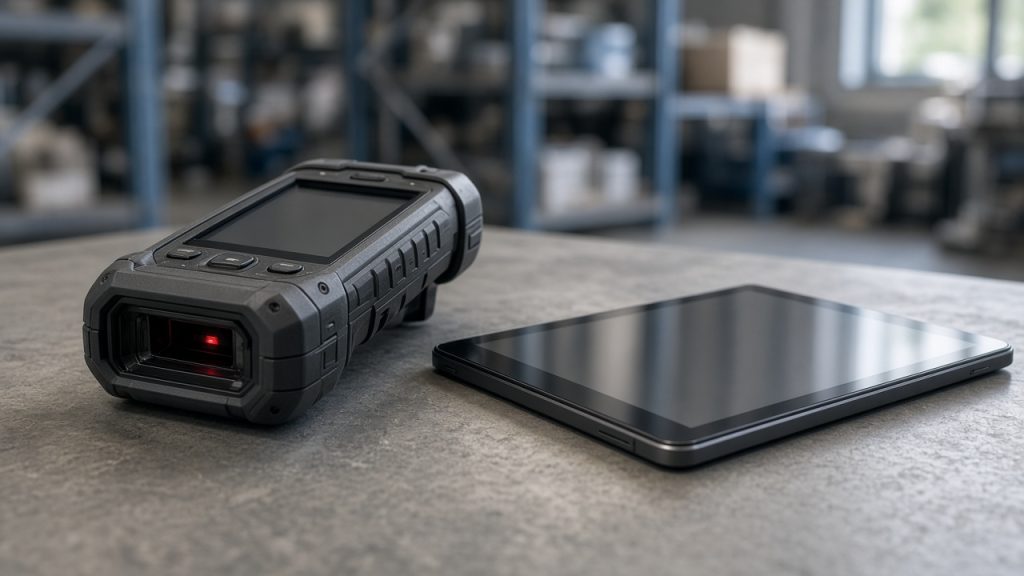
When a device is used on a plant floor, in a vehicle or outdoors, its purchase price is only a small part of what it costs. The bigger costs are downtime, replacements and the work that doesn’t get done while a device is broken.
Where consumer devices fall short
- Screens that crack or become unreadable in direct sunlight.
- Dust, heat and moisture getting into ports and vents.
- Batteries that don’t last a full shift.
- No dock, mount or hot-swap options for daily use.
What rugged actually means
Look for published ratings rather than marketing words: an IP rating for dust and water, drop-test specifications, operating temperature range, display brightness and glove-friendly touch. These tell you whether a device suits your environment.
Think in total cost of ownership
Count the purchase price, expected lifespan, repair and replacement rate, lost working time, accessories and support. For demanding environments, a rugged device that lasts several years typically beats a cheaper device replaced again and again.
When a consumer device is fine
In a climate-controlled office or a light-use setting, standard devices are often the right choice. The goal is to match the device to the job — not to buy rugged for its own sake.
Not sure which fits your team? Describe your environment and we will recommend the right form factor, ready to deploy.